MU
MU$1,068.22▲ +1.35%
MU closed $1068.22 +1.35%; RSI 55.7, SMA20 1005.67 and $924.03/$1096.16 band guide tomorrow.
Read reportPreparing your page.
The news will be here in a moment.
IN A CONNECTED WORLD
Multiple perspectives. One place.
Your curiosity, your daily feed.
MU closed $1068.22 +1.35%; RSI 55.7, SMA20 1005.67 and $924.03/$1096.16 band guide tomorrow.
Read reportTSLA closed $353.41 -1.13%; RSI 39.6, SMA20 365.39 and $353.41/$380.12 band guide tomorrow.
Read reportAMD closed $620.90 +2.14%; RSI 70.4, SMA20 542.73 and $456.16/$630.63 band guide tomorrow.
Read reportCRWV closed $87.48 +2.83%; RSI 40.1, SMA20 86.37 and $79.88/$99.83 band guide tomorrow.
Read reportSKHY closed $185.80 +2.13%; RSI 41.5, SMA20 182.20 and $160.78/$198.63 band guide tomorrow.
Read reportGOOG closed $337.57 -0.47%; RSI 57.6, SMA20 338.72 and $328.38/$350.87 band guide tomorrow.
Read reportPLTR closed $186.23 -0.67%; RSI 71.8, SMA20 178.45 and $165.86/$192.59 band guide tomorrow.
Read reportTSM closed $449.29 -0.79%; RSI 58.0, SMA20 433.66 and $413.75/$452.88 band guide tomorrow.
Read reportAMZN closed $246.21 +0.02%; RSI 42.6, SMA20 252.61 and $245.96/$258.90 band guide tomorrow.
Read reportMSFT closed $503.11 -1.20%; RSI 56.5, SMA20 499.62 and $490.30/$516.17 band guide tomorrow.
Read reportQCOM closed $187.78 +0.16%; RSI 57.1, SMA20 183.18 and $166.61/$201.97 band guide tomorrow.
Read reportARM closed $291.25 +2.80%; RSI 56.5, SMA20 272.72 and $234.82/$333.20 band guide tomorrow.
Read reportAVGO closed $358.25 +2.48%; RSI 46.2, SMA20 356.47 and $339.27/$369.68 band guide tomorrow.
Read reportASML closed $1806.95 +2.01%; RSI 58.4, SMA20 1695.78 and $1575.15/$1806.95 band guide tomorrow.
Read reportORCL closed $133.02 +0.32%; RSI 23.1, SMA20 146.92 and $132.60/$162.52 band guide tomorrow.
Read reportMETA closed $715.62 -4.79%; RSI 67.8, SMA20 667.74 and $572.34/$777.59 band guide tomorrow.
Read reportNVDA closed $228.86 +1.68%; RSI 53.8, SMA20 222.32 and $210.96/$230.36 band guide tomorrow.
Read reportUBS lifting memory spend from $71 billion to $923 billion by 2027, Citi flagging shortages that deepen through 2031 on continual learning, and Samsung hitting about 80 percent yield on HBM4 converged in the same week as Micron and the broader memory chain ripped through a psychological threshold on Friday.
I unpacked Joseph Hogue CFA's thesis that September could deliver a 10-20% shakeout in hot AI names, yet still be a buying window rather than the end of the cycle. The video frames a 31% rebound since April, a market at 26 times earnings and monster runs in Nvidia and SanDisk, argues the real bear-market signal will come from audited post-IPO results at OpenAI and Anthropic, and screens infrastructure, memory and cybersecurity stocks on growth-adjusted valuation.
MoneyFlows reframes a sharp sell-off after AI slowdown headlines as a misread of a deep hardware bottleneck: HBM consumes roughly a third of global DRAM capacity to return about an eighth of output, and that squeeze maps to three stock ideas — Micron's full-stack memory, SanDisk's persistent storage scale and Silicon Motion's controller traffic.
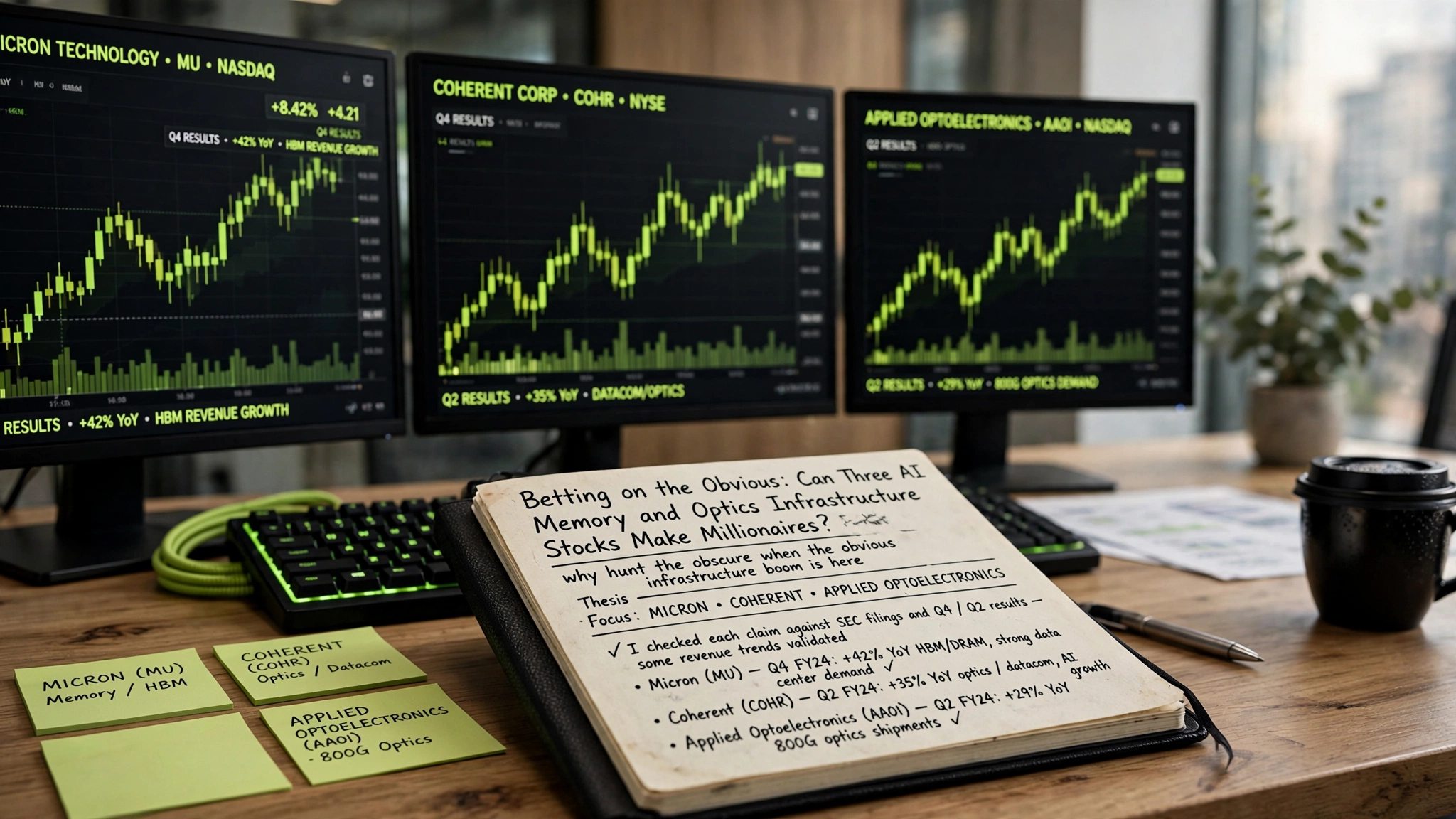
A YouTube investing thesis that says 'why hunt the obscure when the obvious infrastructure boom is here' spotlights Micron, Coherent and Applied Optoelectronics. I checked each claim against SEC filings and Q4 / Q2 results — some revenue and EPS figures in the video run well above filed numbers. The corrected picture shows a memory-cycle bet, an optics backbone bet and a small-cap execution bet, all tied to the same AI data-center bottleneck heading into Micron's Sept 30 print.
Smooth Trader TV's 4-hour-plus Night Market captures the Sunday open from Grenada: with Tokyo shut Sep 21-23 and volume thin, the Nasdaq futures session debates target 116 and band top 247, a $3k green-diamond scalp opens the night, and a travel desk on Starlink closes with an alarm set for London.
Point72's Q3 2025 13F shows about $2 billion concentrated in just five names — Snowflake, Keurig Dr Pepper, Texas Instruments, Oracle and Procter & Gamble — blending AI beta with staples defense.
At Blackstone's September 2026 investor gathering, President Jon Gray put one question at the center — does the trillion-dollar AI infrastructure bill have a payoff? Tracing token traffic at Google toward 3.2 quadrillion a month, OpenAI and Anthropic racing to a $105 billion revenue run rate, and a 21-fold jump in model spend across 1,400 companies, he argued demand still leads supply, then reached back to the 1870-1900 industrial surge and the two ads from the 1984 Super Bowl to connect today's capability boom to the physical bottlenecks ahead.
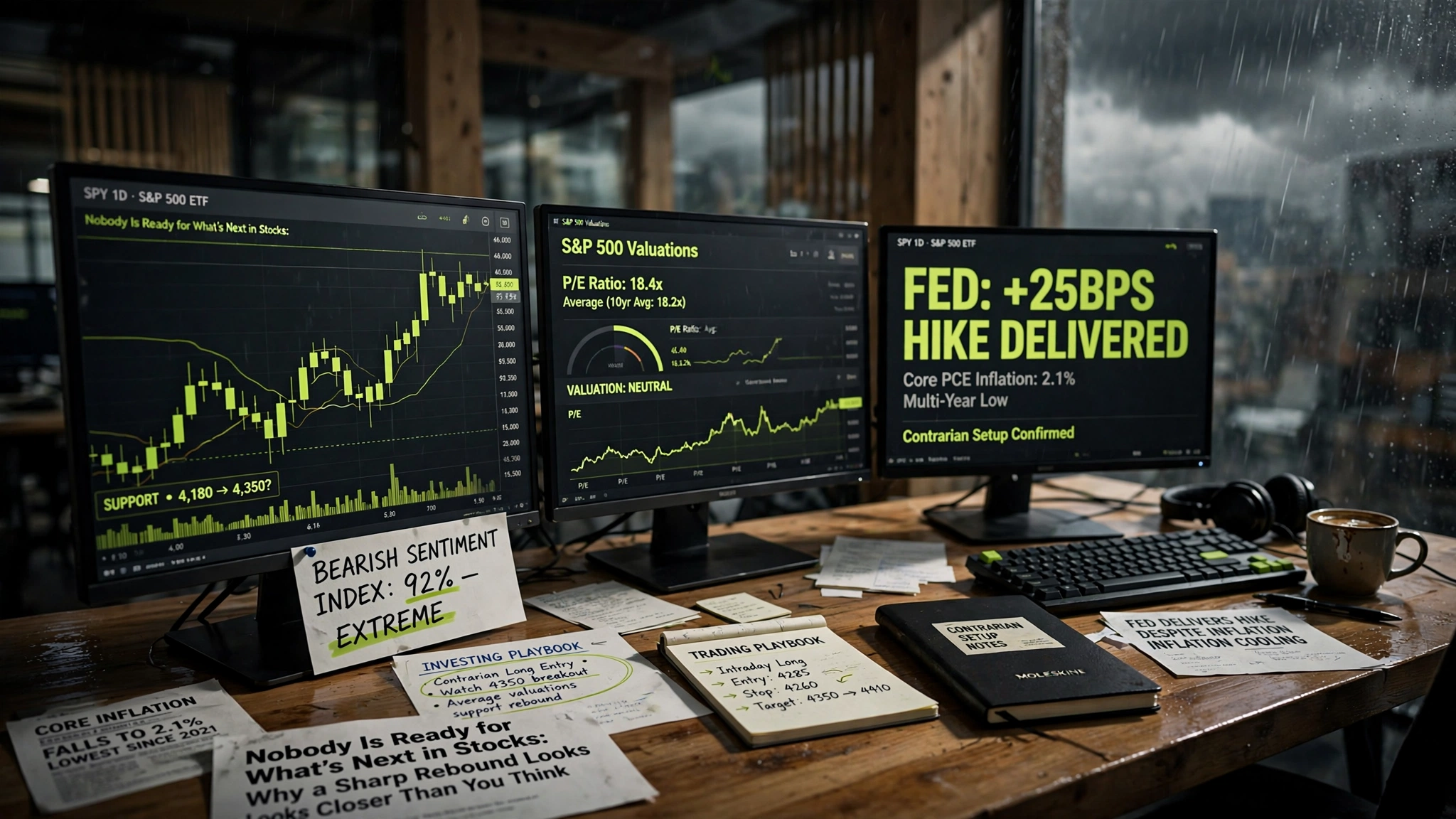
Extreme bearish sentiment meets average S&P 500 valuations and a Fed hike delivered despite multi-year-low core inflation — a classic contrarian setup. The video stitches these data points into separate investing and trading playbooks.
Palo Alto-based AppLovin turned a hidden ad engine inside 100,000 games into an e-commerce discovery machine with deep learning, jumping its on-platform spend from $11 billion to $20 billion, lifting a $3.8 billion market value to $250 billion through a $6 billion buyback, and now defends the most profitable slice of a $50 billion ecosystem that reaches one billion players a day with an 84% EBITDA margin.
MarketBeat analyst Chris Markoch centers three small biotechs that face near-term FDA events: Kodiak Sciences, Capricor Therapeutics and Invivyd. The video ties the patent cliff and pipeline renewal pressure to why a single Phase 3 readout can move a price by more than 100 percent, then contrasts an 89 percent institutionally owned mid-cap with a 33 percent short-interest speculative name, stretching from a 690-patient eye study to a November 22 PDUFA date and an 84-cent micro-cap on the calendar.
The Bank of Japan hiked 25 bps as expected but sounded unexpectedly dovish, rattling markets — yet the S&P 500 still closed up 0.17% with the 10-year back at 5% and oil near $100; Bitcoin's defence of $75.5K and key technical levels in oil, gas and gold dominated the weekly wrap.
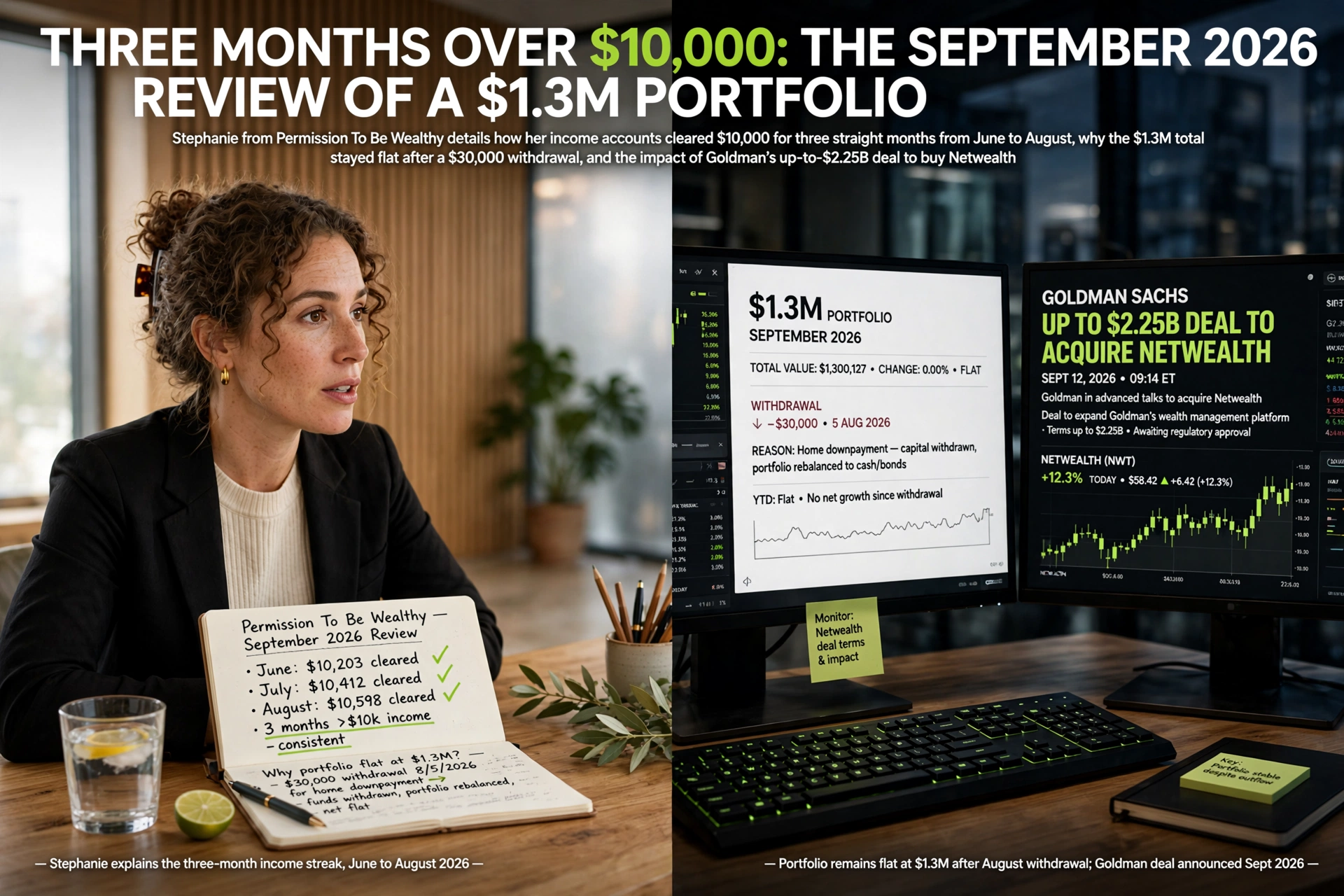
Stephanie from Permission To Be Wealthy details how her income accounts cleared $10,000 for three straight months from June to August, why the $1.3M total stayed flat after a $30,000 withdrawal, and what Goldman's up-to $2.25B deal to buy NEOS means for a portfolio where NEOS funds dominate distributions.
Ricky Gutierrez maps a 24-hour flip from Iran-mediator optimism to a reported large U.S. move against the Houthis in Yemen and a 1,600-drone strike on Moscow's refinery; the thread runs through oil into inflation, the Fed pricing at least one more 2026 hike with a 59% chance in five weeks, and a Nasdaq pinned between QQQ 740 resistance and 700 support, arguing AI keeps the tape 20–30% elevated while everyday demand and broader prosperity lag and urging traders to respect the range.
Even as anger at AI grows, the data center bill keeps getting paid — this analysis filters the noise through a 20-million-calculation signal system to isolate four hardware and memory names that stay collectible because physical bottlenecks keep old chips earning.
While the Fed lifts to 3.75-4% and 30-year mortgages hover above 7%, two data-center names tell the opposite story: AMD's data-center revenue up 107%, Marvell's up 46%, with hyperscalers guiding to ~$725B capex in 2026 (Goldman sees global AI investment above $1T) — one as a compute platform, the other as a custom-silicon architect.
Ross Cameron breaks down how a $2,000 starter grew to $105,951 in 46 days — a three-step routine of stock selection, pullback entries and disciplined exits — held together by 70% accuracy and a 1:1 profit-to-loss math across 113 trades.
JackTrades ties a flawless run from July 22 through August and into September 15 — plus about $40,000 in Lucid payouts in the last 30 days — to a 4-hour-aligned PO3 (Power of Three) framework and a five-step entry checklist.
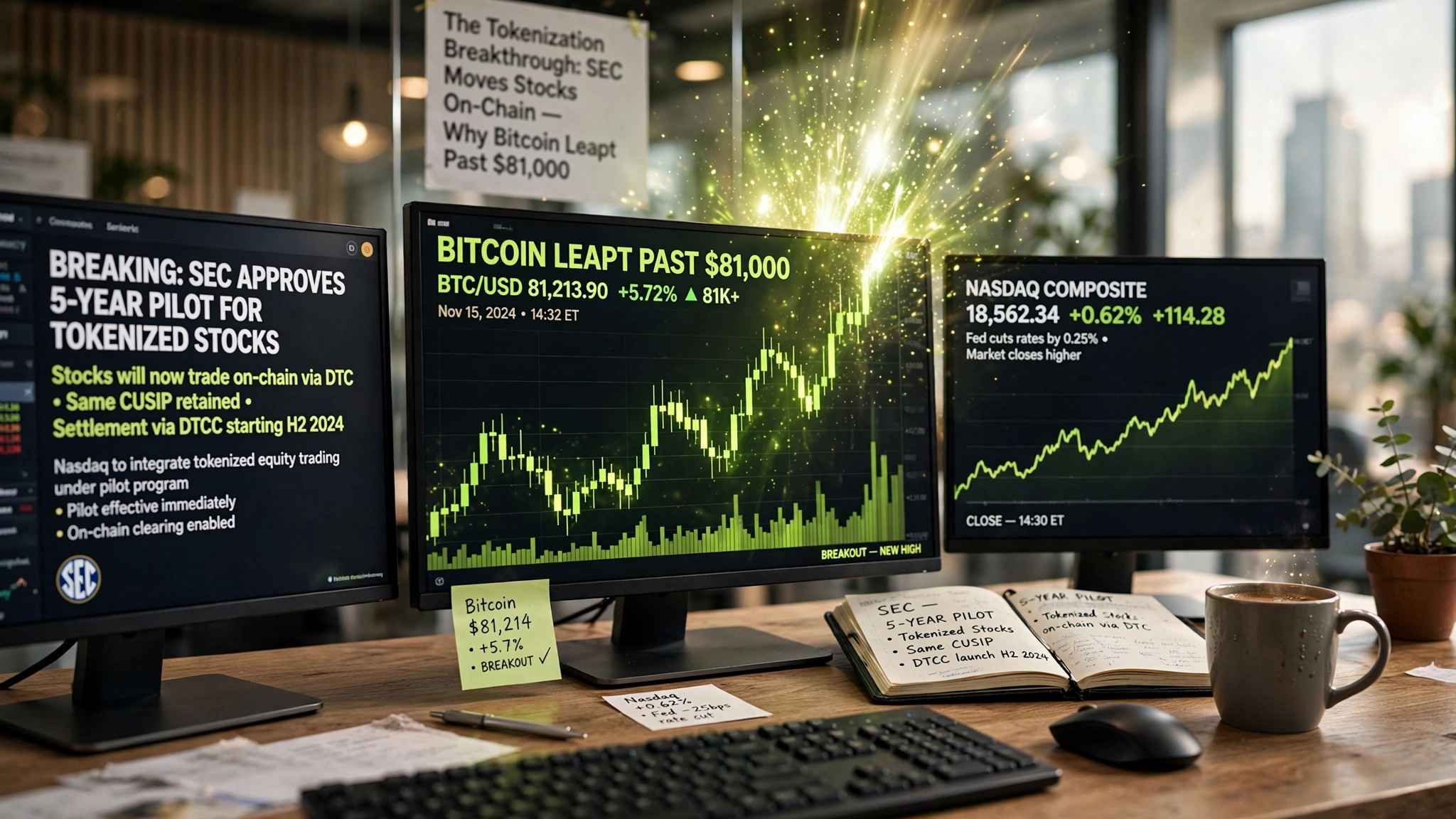
While Nasdaq digested the Fed's quarter-point cut and closed higher, Bitcoin shot past $81,000 on the SEC's five-year pilot for tokenized stocks; Nasdaq will trade tokenized shares with the same CUSIP via DTC, with DTCC set to launch in H2 2026.
With the US 10-year back near 5%, Japan hiking to a 31-year high, Brent above $100 and $23 billion leaving global equity funds in a single week, the core signal is not the Fed's 25-basis-point hike alone. The global price of money is resetting. Rising bond supply, oil-driven inflation pressure and AI-related issuance together raise the hurdle for equities.
Altimeter Capital founder Brad Gerstner's claim that semiconductors will account for nearly all of Nasdaq's gains lands on the same spot as the first half of 2026: Jefferies counted 99 percent of Nasdaq-100 returns in just ten names, with Micron alone at 26 percent and about $920 billion added in a quarter, making the narrow peak look hard to sustain.
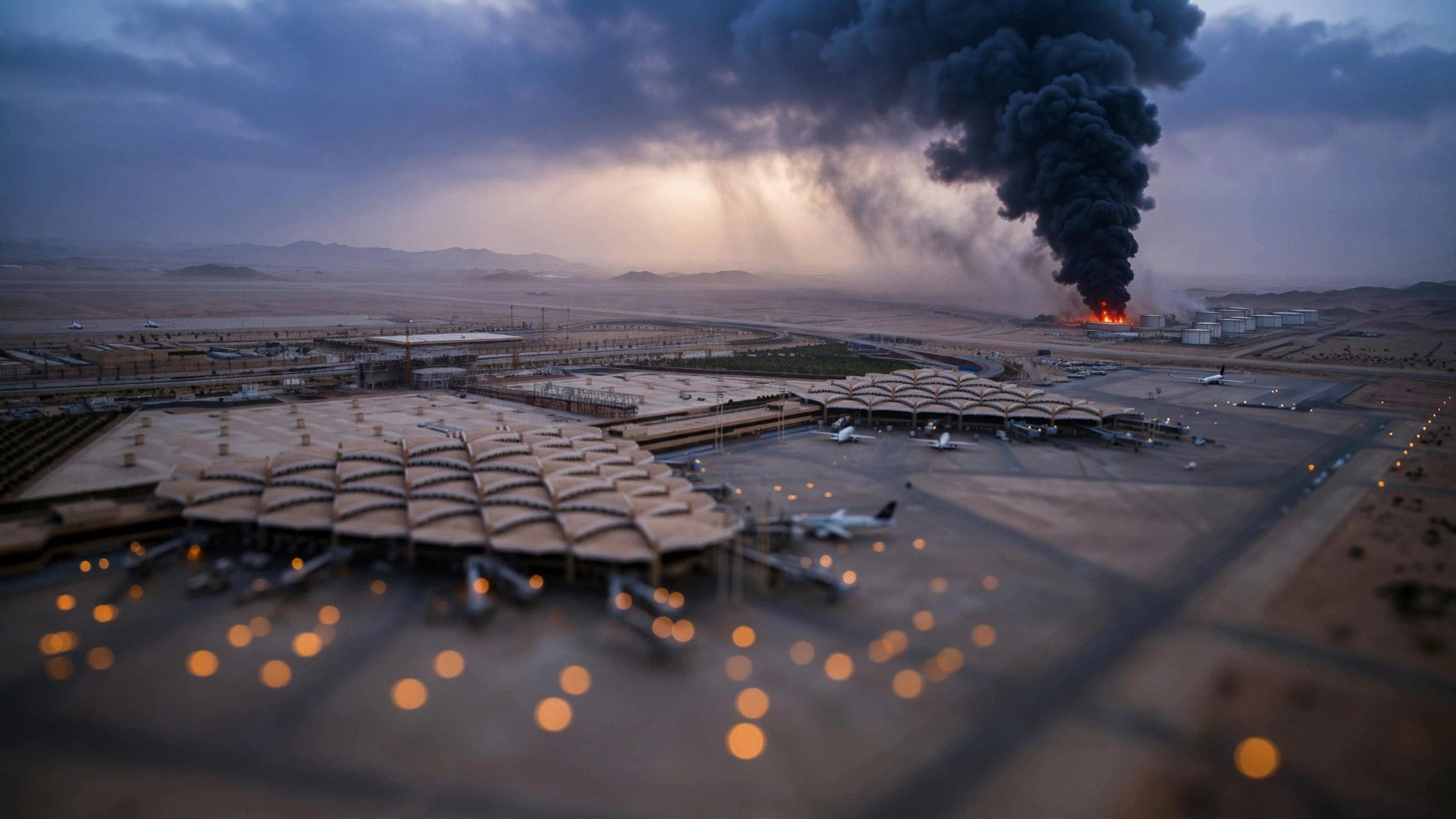
On September 19 a fuel tank linked to Aramco caught fire near Riyadh's King Khalid International Airport, flights were disrupted and the capital issued its first air-raid alerts in months. Speaking to Dialogue Works, Johns Hopkins professor Steve Hanke explains why the shock is pushing oil prices higher in an already tight market.
The Fintech Builder put TypeSafe's structured-decision model Jev through a live lab across five markets and 300 cutoffs: 90 candles, 15 typed questions, and trades governed by its own stops and targets. The outcome was a 50% hit rate and a striking consistency gap.
Quantified Strategies breaks down its Triple RSI strategy tested on SPY: with a 5-day RSI, 200-day average and triple RSI filter, it delivered about 90% win rate, 1.4% average gain per trade and ~5-day holding period across just 83 trades since 1993.
MarketBeat Clips frames Tower Semiconductor (TSEM) as a specialized foundry making silicon wafers for photonics — a pick-and-shovel play that has already rallied over 200%. The debate is whether earnings marching from $3.86 to $6.64 and then nearly doubling again, backed by record Q2 2026 results, still leaves runway.
Among the noise, meaningful connections.